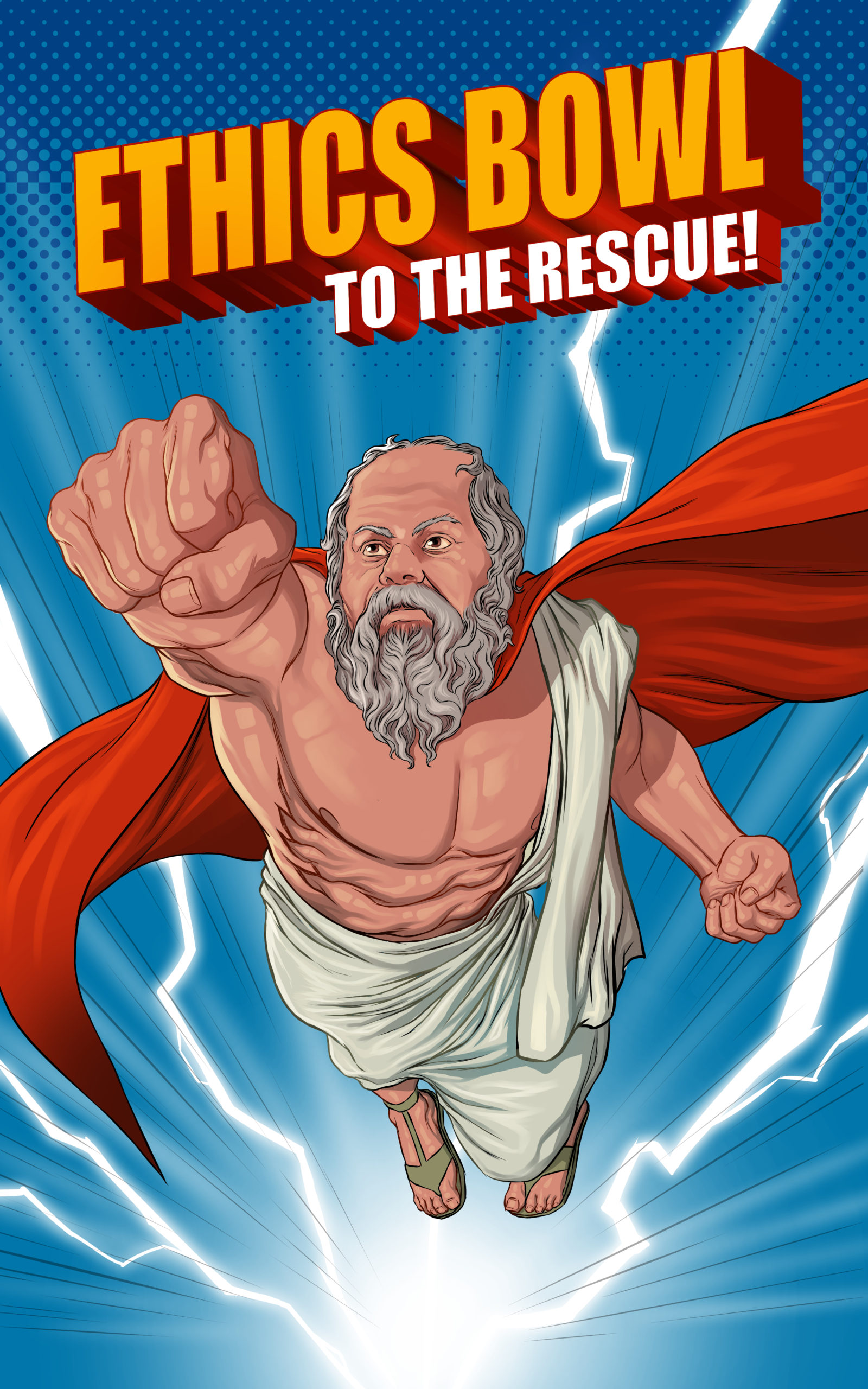
IEB teams should be aware of a prestigious ethics essay competition for which they would likely be very competitive. Established in 1989, the Elie Wiesel Prize in Ethics Essay Contest is only open to college students enrolled at 4-year institutions, and the deadline is coming up fast on January 20th. But if you, your team members, or someone you know might qualify and be interested, please spread the word.
AI usage is grounds for disqualification, so ensure folks are leveraging those organic human brains. Essays should be between 2,500 and 3,500 words, full guidelines are here, and here’s this year’s prompt:
2026 Essay Theme: Silence, Conscience, and Responsibility
Is silence an act of compassion or complicity?
When does silence protect dignity and when does it betray it?
When silence becomes complicit, what is your moral responsibility?
Do we owe the world our voice or does the world sometimes need our silence to heal?
Reflect on a time, in your life or in the world, when silence itself became an ethical choice.
What did that moment teach you about conscience, courage, and responsibility?
Engage us. Enlighten us. Explore the ethics of any question that moves you, whether drawn from the tension between silence and speech, or from any other moral challenge, close to home or across the world. We are eager to learn from you.
Free hint to Ethics Bowlers: consider engaging Rochester Institute of Technology Professor Lawrence Torcello’s 2014 article, “On The Virtues of Inhospitality,” which is all about silence and responsibility, available for download here, overview video here. Good luck!
Ethics Bowl Organizers: here’s a new judge recruitment video all but guaranteed to turn your lukewarm “Maybes” into enthusiastic “Yeses!” The secret is SuperSocrates. He’s irresistible…
Credit to Northern California HSEB co-organizer Chris Ng for the idea!
If you do something because it helps others, but also because it helps you, does that dilute the praiseworthiness of the action? In other words, are more selfless acts morally better? On the other hand, could pursuing good for others + good for you actually amplify an action’s praiseworthiness – make it a better action overall? Or would your whys have little impact on an action’s praiseworthiness? Perhaps outcomes are all that matter – intentions be darned?
Why all the questions? Because NHSEB case 6 is about 17-year-old college hopeful Erin, who founds a nonprofit to spread literacy, but also because it will look really good on her college admission applications.
There’s some intuitive appeal of Erin doing it because it will help others. But it’s hard to blame her for also wanting to improve her chances of getting into the college of her choice. All things considered, we probably wouldn’t criticize Erin for helping to cultivate her community’s love for reading. But if we had reason to think 95% of her motive was to get into Yale and only 5% was to promote literacy, we’d probably think less of her than were those %s reversed. The questions are, how much less would we think of her, why, and how should our judgments about Erin influence the motives that we ourselves suppress or nurture in our own decision-making?
As you begin to think about the specifics of Erin’s case (always read the specifics), as well as related areas good judges might ask you to tackle, consider the “Very Helpful (But Optional) Resources for Further Exploration” in coach Michael Andersen’s excellent study guide below, as well as the entire thing. Thanks as always for the awesome study guide, coach Michael!
Yesterday APPE announced the teams advancing to the IEB national championship in St. Louis March 7th and 8th, as well as the cases. The cases and schedule are here and the teams below.
All will be competitive, but based on past performance, reputation, and/or coaching, teams to watch include 2025 IEB champs Macalester, Whitworth, Stanford, UC Santa Barbara, Florida, UMBC, Utah State and Utah Valley, DePauw, Snow, and West Point.
Congrats to all who made it – see you in St. Louis!
Case 8 in the high school set and case 3 in the middle school set (same case: “Fido as Feed”) invites teams to weigh the nourishment of zoo animals against the emotions of pet owners. Or, at least that’s one way to frame a zoo in Denmark that invited donations of “unwanted but otherwise healthy animals” to be used as food for their carnivores.
The idea is to allow the zoo animals to enjoy the whole meal – fur, organs, bones, and all – as they would in the wild. And zoo officials specified that they’re not requesting cats or dogs, which was probably a smart PR move, but rather “chickens, rabbits, or guinea pigs,” as well as horses. The Ethics Bowl case doesn’t mention horses, but that species was indeed included in the zoo’s request.
My high school team said this case made them sad. And they did indeed look and sound sad while discussing it. But it also gave them a chance to think about how we treat similar species differently. The same person who provides a cushy indoor life for their beloved cat might add bacon to their cheeseburger without a second thought. And when it comes to how that cat might be treated as it nears the end of its life, it seems a person would either have to be very callous or very enlightened to volunteer it to be ripped apart by a tiger, even with reassurances that it would be humanely euthanized first.
I sense fruitful connections to how we treat the cadavers of people who donate their bodies to science. But before making that leap, check out coach Michael’s excellent-as-always study guide below, tailored to work for either a high school or a middle school Ethics Bowl audience. Enjoy!
What if you made plans with friend A, but then friend B came through with tickets to see your favorite band? What if you had a friend that your other friends wanted to exclude from a group trip to the movies? What if you accidentally revealed a friend’s secret and worried they’d hate you if you confessed?
Longtime philosophy professor and Ethics Bowl supporter Dr. Jana Mohr Lone recently released a new illustrated book series, What Would You Do? Moral Dilemmas for Kids, and addresses these questions and more in her beautifully illustrated title on Friendship. I ordered a copy on Amazon and was quickly reminded how relationship lessons first experienced in childhood extend across our lifespans. Just as some friends made more of a point to attend our birthday parties, some friends make more of a point to honor our special projects. Just as some friends took up for us on the playground, some friends are more outspoken allies in the office and on social media. And just as then, some of our present day friends are more deserving of the title, as well as the affection and loyalty that come with it. These are the sorts of realizations good interpersonal Ethics Bowl cases bring to the surface, but with Lone’s guided questions and the playful art, the insights come even more effortlessly, and regardless of the reader’s age.
Each section begins with a scenario, followed by carefully articulated prompts, and then finally some possible paths a thoughtful person could take. If you’re a team captain choosing basketball players, should you try to stack your team with the best athletes? Or should you honor your buddy who couldn’t hit a layup to save his life, but who loves hoops so much that he legally changed his name to Jordan? If you picked him first, he’d be thrilled, but your team would likely lose… and your motives would likely be obvious. So maybe it would be better to simply ensure he’s not picked last? However, as Lone invites the reader to consider, your decision’s impact on non-friends’ feelings is relevant, too. (Perhaps this is a scenario with wisdom older readers might relate back to assigning responsibilities within the family, classroom, or workplace?)
“It’s not easy to balance your feelings for your friend and your role as team captain. You don’t want to make your friend feel bad. But you also wonder if choosing team members based on friendship will affect the other players’ feelings.”
In addition to the pictures here, you can peek inside on the book’s Amazon page and see for yourself how you might work this entry on friendship into a class assignment or as a gift to a parent or child you love. And as Lone says in the closing paragraphs in her notes for parents and teachers, the goal isn’t so much to dictate how kids should feel or even what they should do. But to simply ensure they’re thinking and feeling, and doing so in an earnest, honest way.
“It is useful for children to be able to talk about their responses to the kinds of scenarios described in this book, and to learn strategies for evaluating the right ting to do in various circumstances. The goal is not necessarily to find that one right answer, but to be able to think through the issue and arrive at a reasoned decision… Ultimately, we want children to become reflective and sensitive, ethical adults.”
And it’s this goal of developing “reflective and sensitive, ethical adults” that Lone has been achieving for many years as a leader within the philosophy for children movement, which we in the Ethics Bowl community certainly share. Thank you for the excellent book, Jana!
Other books in Mohr Lone’s What Would You Do? Moral Dilemmas for Kids Series include titles on:
Should a public park trail be paved to make it easier for people in wheelchairs to navigate, even though this might harm nearby plants and exacerbate erosion? NHSEB regional case 2 essentially pits respect for the natural habitat against improving accessibility for humans. However, there may be technological solutions that could balance both.
As your team thinks about this one and works through coach Michael Andersen’s study guide below, consider searching for “sustainable” trail options that might protect wildlife and foliage while simultaneously improving humans’ ability to enjoy nature.
However, be sure to seriously engage the case’s discussion questions, too, because even if a crushed stone or reclaimed wood trail might solve the immediate problem, Bowl organizers may very well pose a competition question that asks teams to balance human and nonhuman interests more generally (see coach Michael’s recommended video #1, Whose Life is More Valuable? for guidance). This is true for all Ethics Bowl cases. Good teams should always be ready to pivot into nearby philosophical territory, for if an initial question doesn’t stray from the case details, judge Q&A probably will.
Several cases this IEB and NHSEB season involve treatment of incarcerated persons – whether prisoners’ religious dietary needs should be accommodated, whether they should be allowed to trade organs or bone marrow for reduced sentences, at what age (if any) life without the possibility of parole might be a just punishment. It would be understandable for teams with little experience with the prisons system to base their judgments on what they’ve learned from movies and television, or to think only about criminals’ victims. So, here are two resources to help expand their empathy and enhance their views – a remarkable video of incarcerated students actually doing Ethics Bowl, and an excerpt from Ethics Bowl to the Rescue! chapter 12: Bowls Behind Bars.
One place you might not expect to find Ethics Bowls is in prisons. Then again, there was once a somewhat famous philosopher who did some of his best work while behind bars. We know this because conversations with friends who came to visit were later published. One friend tried to convince him to escape, even offering to help, which led to a discussion on the nature of justice and citizens’ duties.
On the final day, talk turned to logical arguments concerning the immortality of the soul. The imprisoned philosopher concluded that our soul most likely does survive bodily death, which might have made his ultimate sentence a little easier to bear. Anyway, you may have heard of him—Socrates?
While Socrates’s dialogues with Crito, Phaedo, Simmias, and others may not have constituted an Ethics Bowl, Ethics Bowls have been held in prisons in at least five U.S. states. And as you might imagine, they’re an opportunity to not only enhance moral reasoning, but to humanize, teach empathy and compassion for all involved.
San Quentin Pioneers
In the first known case, University of California Santa Cruz philosophy professor, IEB coach, and Northern California HSEB organizer, Kyle Robertson, coached a group of students at San Quentin State Prison (later renamed San Quentin Rehabilitation Center) in late 2017, then brought his IEB team to hold a friendly match in early 2018. Writing for UC Santa Cruz, Scott Rappaport covered the event, as well as the background leading up to it.
Twice a month from last September to February, UC Santa Cruz philosophy lecturer Kyle Robertson woke up early, dropped his kids off at school, drove north for one hour and fifty minutes, crossed the Richmond Bridge, and went to San Quentin.
He would park in the prison lot, walk past a gift shop selling art created by death row inmates, and enter the main gate, where he would sign in at the first of three consecutive checkpoints. Finally entering the prison yard, he would walk past prisoners playing on the basketball courts and others engaged in games of chess, to get to the education center of the prison.
Robertson was there to teach a course in Ethics Bowl—a non-confrontational alternative to the traditional competitive form of debate—in collaboration with the Prison University Project (PUP). At the same time, he was also teaching an undergraduate course and coaching a team in Ethics Bowl at UC Santa Cruz. He soon suggested and arranged a very unusual debate between seven philosophy students from UC Santa Cruz and a team of prison inmates from San Quentin. It took place in the prison chapel—in front of an audience of nearly 100 inmates.[1]
UC Santa Cruz IEB team member Pedro Enriquez was there that day. He was a junior at the time and recalled his initial unease.
I thought it was going to be a lot more like the movies where they’re locked down, and you know, they’re going to be hollering or whatever. So when we walked in after we passed the security and they were just walking around, I was like, “Wait, is anybody gonna do anything? Like, where are all the cops? What if they do something?”[2]
Enriquez and his teammates quickly realized they were safe. And when apart from an interruption for a mandatory headcount, the rounds progressed per usual. The San Quentin team took the trophy, the UC Santa Cruz IEB team returned the next year, and word soon spread.
Contagious Compassion
Among the judges that day was none other than Ethics Bowl creator Bob Ladenson who had moved to California to be closer to his grandkids after retiring from the Illinois Institute of Technology. At his side was the IEB director at the time, professor Richard Greene from Weber State University in Utah. Greene spoke with many of the imprisoned students and was so impressed by their seriousness and dedication that he worked with Rachel Robison-Greene of Utah State University to found a similar program in Utah. By the spring of 2020, they had an Ethics Bowl class in both the men’s and women’s state prisons.
COVID derailed their efforts temporarily. But they restarted in 2023, and after an eight-week class, two Utah IEB teams, one from Weber State and another from Utah State, visited for a friendly at the women’s facility. Greene had nothing but good things to say about the event, as well as his experience working with the students… [continued with sections on Ethics Bowl in prisons in Washington, Maryland, and Massachusetts].
[1] “How to Find Truth in Today’s Partisan World” by Scott Rappaport for UC Santa Cruz’s Center for Public Philosophy, reports.news.ucsc.edu/ethics-bowl
NHSEB regional case 1, “Whose Germline is it Anyway?” (also included in Oregon’s MSEB cases) invites us to consider the permissibility of editing human genes in heritable ways. It’s one thing when the health risks of CRISPR gene editing would only directly impact impact an autonomous, volunteering adult. It’s another when we’re editing the genes of the unborn. And it’s yet another matter when the edits could be passed to offspring and incorporated into the broader human gene pool.
When my team discussed this case, they worried about the unknown health risks, but thought those could be overridden when the ailment being addressed was sufficiently severe. However, given that this is case #1, and so the first they discussed, they may change their minds as we return to it.
And thanks to coach Michael Andersen’s excellent study guide below, they’ll have a lot more to think about this time around!
I’ll often slide Ethics Bowl cases into my philosophy classes based on topic. The NHSEB’s case search function and IEB’s organized case archive make this pretty easy. But sometimes it’s fun to let students choose which cases and topics they’ll cover.
Below is a list of human-generated summaries of the 2025-2026 NHSEB and IEB cases. You could turn this into a paper ballot or load them into a BrightSpace/Canvas/Blackboard survey, allow each student to pick their top five, then work through the most popular as time allows. I loaded my poll into BrightSpace – happy to export and share on request.
They’re not in order – I moved them around a bit, listing NHSEB case 5: Grade Expectations first because I think that one will catch students’ attention. IEB case 4: Shutting Out Le Pen will probably also be hot given the connection to American politics, but we’ll see – might be a topic students (wisely?) choose to avoid.
I’m polling my community college Intro to Ethics students now and am eager to see which they select. If you do the same and would like to compare results, or if you have any trouble tying the descriptions back to the case titles (I realize most folks are doing NHSEB or IEB, not both), please reach out. Also feel free to list your own favorites in a comment.
Whether it’s OK for teachers who ban student AI use to use AI to prepare lectures or assignments, or grade.
Whether SNAP benefits recipients should be barred from purchasing soda or other junk foods.
Whether to allow prisoners to trade organ donations or bone marrow for reduced sentences.
Whether the U.S. should adopt France’s approach to presidential elections and allow candidates convicted of felonies to become president, or whether France should adopt the U.S.’s approach and allow candidates to become president regardless of their criminal records, so long as they haven’t been convinced of insurrection/government overthrow (France banned Le Pen from running for five years based on an embezzlement conviction, while the U.S. allowed Trump to become president despite a felony conviction for falsifying business records tied to election hush money – essentially whether democratic popularity should override criminal convictions or whether certain convictions should disqualify candidates from high office).
Whether it’s OK for CGI to generate dwarfs in films or if dwarf acting roles should go to actual dwarves, whether it’s OK for Black Frenchmen to play traditionally White characters in The Beauty and the Beast, whether it was OK for Ariel to be African-American in the remake of The Little Mermaid, etc.
Whether police officers and prisons should accommodate Muslims’ religious dietary requirements (no pork, fasting during Ramadan), similar to how Jews’ and vegans’ requirements are often accommodated.
Whether it was OK for an activist artist to starve piglets to death in order to encourage scrutiny of the factory farming system.
Whether the international community should provide aid to Afghanistan in order to help its citizens receive health care and food, or whether aid should be withheld in order to pressure the Taliban to improve conditions for women and girls.
Whether the new “Golden Visa” program allowing foreign nationals to purchase U.S. residency and a path to citizenship for $1-5 million should be continued or ended.
Whether it’s OK to sentence murderers who commit their crimes at age 20 or 19 to life in prison without the possibility of parole.
Whether more states should allow people to choose to “compost” their bodies in lieu of cremation or traditional burial.
Whether it’s OK to require tourists to conduct community service or pay extra fees in order to visit crowded sites to reduce (or at least receive compensation for) over-toured sites.
Whether killers of women should receive harsher sentences or whether “femicide” should be discouraged by addressing root causes that make women vulnerable such as improving access to education and small business loans, or programs encouraging men to better value and respect women.
Whether it was OK for a town in Michigan to ban all political and ideology flags on public property as a way to diffuse tensions between the conservative Muslim majority and the LGBTQ+ community.
Whether paid surrogate mothering should be allowed across borders (wealthy couples hiring surrogates in poorer countries, for example).
Whether it’s OK for a zoo to solicit aging pets to use as food for exotic animals.
Whether it’s OK to allow AI-generated likenesses of murder victims to “testify” at their killers’ sentencing hearings.
Whether prison visitors should be allowed to meet in person with their loved ones or only allowed to interact via webcam.
Whether it’s OK to edit genes in heritable ways (so the changes don’t simply impact that person, but their offspring and the broader human gene pool).
Whether a park trail should be paved so it’s more accessible to persons in wheelchairs or left unpaved in order to better protect the natural habitat.
Whether a lady should tell her roommate that the man the roommate’s dating was previously married and has a child.
Whether it’s OK for snack food manufacturers to modify their portions to better attract consumers on new GLP-1 weight loss drugs.
Whether it’s OK for the Amish to pull their kids from school after the 8th grade.
Whether it’s OK to use brain implants to improve one’s competitive video game playing abilities.
Whether to limit or endorse AI as a personal therapist.
Whether Home Owners Associations that impose fines on residents for using unapproved decorations or failing to care for their yard are OK.
Whether a political minority group in Sri Lanka should… I’m not sure. My team found IEB case 6: Tamil Autonomy especially technical and dense, and the moral upshot seemed to focus on whether a minority group should push for national independence. If you understand that case better than we do, please volunteer to write a guest case analysis! I’m sure other teams are struggling with it as well.